The Department of Animal Nutrition at the College of Veterinary & Animal Sciences, Banda University of Agriculture & Technology (BUAT), Banda has been established to strengthen scientific livestock production through quality education, research, and extension in animal nutrition. The department has been entrusted for human resource development besides research and extension activities. The Department functions in accordance with the Minimum Standards of Veterinary Education (MSVE) prescribed by the Veterinary Council of India (VCI), ensuring comprehensive theoretical and practical training for undergraduate students.
The Department provides instruction in principles of animal nutrition, feed technology, ration formulation, nutritional biochemistry, feed evaluation, and applied feeding practices for various categories of livestock and poultry. Emphasis is placed on scientific feeding strategies to enhance productivity, health, reproduction, and economic efficiency.
The research activities involve work on developing feeding strategies for ruminants and poultry. The Department is equipped with well-developed laboratories for proximate analysis, feed and fodder evaluation, and nutritional biochemistry, along with facilities for feed formulation and demonstration. Modern teaching-learning aids, laboratory instruments, and feed analysis equipment are available to ensure hands-on practical exposure and skill development.
Mandate
The mandate of the Department of Animal Nutrition is to impart systematic and scientific instruction in animal nutritional sciences in accordance with MSVE–VCI guidelines, focusing on nutrient requirements, feed resources, ration balancing, feed technology, and nutritional management of livestock and poultry. The Department is committed to improving livestock productivity and health through education, research, and field-oriented extension activities.
Mission
The Department of Animal Nutrition is dedicated to delivering quality education in nutritional sciences, promoting innovative research in feed resources and nutritional technologies, and developing practical competence in ration formulation and feed evaluation. It aims to produce skilled veterinarians capable of applying scientific feeding strategies to improve animal health, productivity, and sustainability while upholding professional ethics and lifelong learning.
Vision
To emerge as a center of excellence in animal nutritional sciences through quality education, impactful research, and technology-driven feeding solutions that enhances livestock productivity, farmer income, and sustainable animal agriculture.
Objectives
- To impart comprehensive knowledge of nutrient requirements, digestion, metabolism, and feeding standards of livestock and poultry as per MSVE–VCI guidelines.
- To develop skills in feed analysis, ration formulation, and evaluation of feed resources.
- To promote scientific feeding practices for improving production, reproduction, and health of animals.
- To provide training in feed technology, feed processing, and quality control measures.
- To encourage research in alternative feed resources, feed additives, and nutritional strategies for sustainable livestock production.
- To inculcate professional ethics, safe laboratory practices, and extension skills for effective veterinary service delivery.

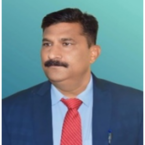
Dr. Digvijay Singh
CO1: Principles of Animal Nutrition
Explain the principles of digestion, absorption, metabolism, and utilization of carbohydrates, proteins, fats, vitamins, minerals, and water in animals.
CO2: Nutrient Requirements and Feeding Standards
Describe nutrient requirements of cattle, buffalo, sheep, goat, pig, poultry, and other livestock under different physiological conditions.
CO3: Feed Resources and Evaluation
Identify and classify feed ingredients and evaluate their nutritive value through laboratory analysis and digestibility assessment.
CO4: Ration Formulation
Formulate balanced rations for maintenance, growth, lactation, reproduction, and work using scientific methods and software tools.
CO5: Nutritional Biochemistry
Interpret biochemical processes related to nutrient metabolism and identify deficiency and metabolic disorders.
CO6: Feed Technology
Explain feed processing techniques, feed preservation, storage, and quality control measures.
CO7: Applied Animal Nutrition
Apply feeding strategies for enhancing milk yield, growth rate, reproductive performance, and disease resistance.
CO8: Nutritional Disorders
Diagnose and suggest preventive nutritional management strategies for deficiency diseases and metabolic disorders.
CO9: Professional Skills and Extension
Demonstrate safe laboratory practices, teamwork, communication skills, and ability to advise farmers on scientific feeding.
- Ration balancing and precision feeding
- Evaluation of unconventional and alternative feed resources
- Feed additives and nutraceuticals
- Nutritional modulation for enhanced milk, meat, and egg production
- Mineral and vitamin nutrition
- Nutritional management for reproductive efficiency
- Feed technology and quality control
- Nutritional strategies for climate-resilient livestock production
Coming Soon....
Coming Soon....
- Animal Nutrition Laboratory (Proximate Analysis Laboratory)
- Feed and Fodder Evaluation Laboratory
- Nutritional Biochemistry Laboratory
- Feed Formulation and Demonstration Unit
- Feed Processing and Grinding Unit
- Modern instruments including Kjeldahl apparatus, Soxhlet extraction unit, muffle furnace, fiber estimation unit, hot air oven, analytical balance, etc.
Coming Soon....
Coming Soon....